
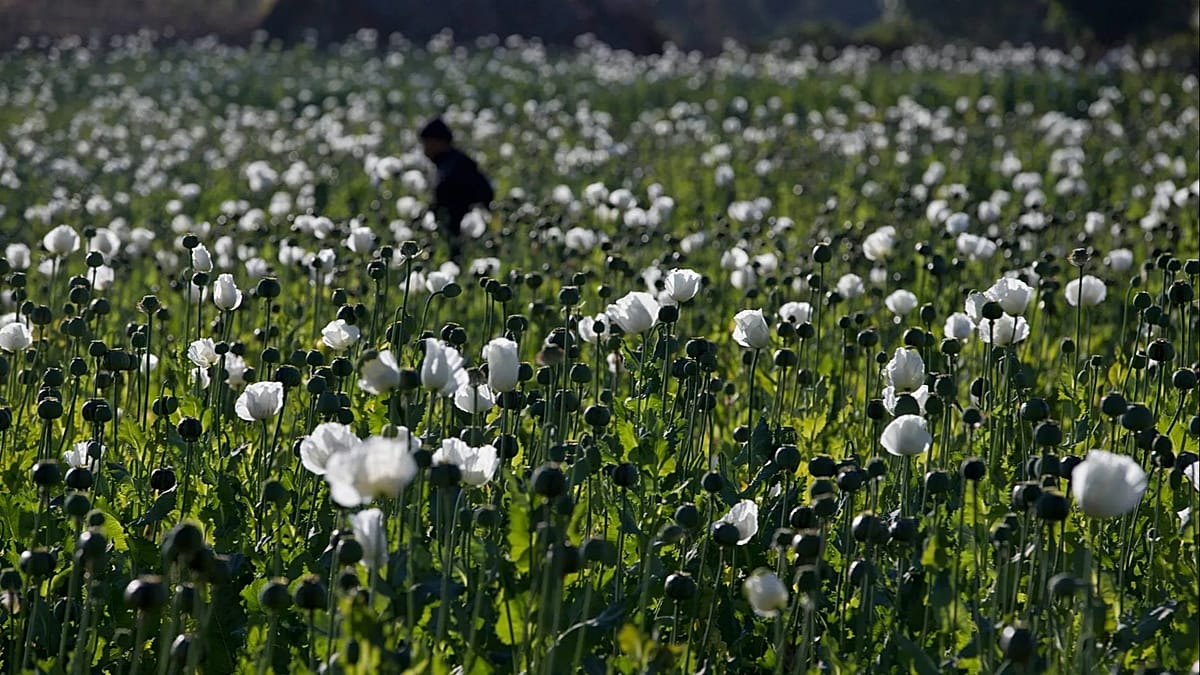
Opium poppy cultivation in Myanmar surged to its highest level in a decade this year as the nation crippled by civil war remains one of the world’s primary suppliers of illicit drugs, according to a new United Nations report.
The growth solidifies Myanmar’s position as the world’s main known source of illicit opium, particularly following a sharp decline in production in Afghanistan after the Taliban imposed a ban following their 2021 takeover.
The Myanmar Opium Survey 2025, issued on Wednesday by the United Nations Office on Drugs and Crime (UNODC), found the area where opium is cultivated expanded by 17% from 2024 to 531 square kilometres, the largest area since 2015.
Opium, which is processed into morphine and heroin, is harvested from poppy flowers and Myanmar’s farmers have pushed deeper into harvesting as the country faces widespread poverty and instability during the ongoing civil war that erupted after the military ousted the democratically elected government of Aung San Suu Kyi in February 2021.
A key driver of Myanmar’s production growth has been surging opium prices. Fresh opium now fetches around $329 (€281) per kilogram, more than double the 2019 price of $145 (€124).
The opium economy in Myanmar is worth between $641 million (€549 million) and $1.05 billion (€900 million), which accounts for up to 1.4% of the country’s 2024 GDP, the report said.
The increase in cultivated land helped offset a 13% dip in average yields caused by intensifying conflict in some areas, resulting in a 1% rise in opium production to about 1,010 metric tonnes, the report said.
The increase also reversed a slight drop last year in cultivation and production and signalled an upswing in the country’s entrenched drug trade. Myanmar already saw growth in cultivation and production from 2021 through 2023, driven by the civil war, the report said.
“Myanmar stands at a critical moment,” said Delphine Schantz, UNODC Representative for Southeast Asia and the Pacific.
“This major expansion in cultivation shows the extent to which the opium economy has re-established itself over the past years — and points to potential further growth in the future.”
There were emerging signs that heroin from Myanmar is reaching markets in Europe previously supplied by Afghanistan, with several seizures over the past year that involved passengers travelling from Southeast Asia to Europe.
While volume wasn’t significant, it pointed to growing demand beyond the region to fill the gap left by Afghanistan’s output collapse, the UNODC survey said.
“Driven by the intensifying conflict, the need to survive and the lure of rising prices, (Myanmar) farmers are drawn to poppy cultivation,” Schantz said. “Unless viable alternative livelihoods are created, the cycle of poverty and dependence on illicit cultivation will only deepen.”
UNODC also described Myanmar as the largest methamphetamine producer in the world. Meth is easier to make on an industrial scale than labour-intensive opium and is distributed as tablets and crystal meth by land, sea and air around Asia and the Pacific.
Northeastern Myanmar is part of the infamous “Golden Triangle,” where the borders of Myanmar, Laos and Thailand meet.
The production of opium and heroin historically flourished there, largely because of lawlessness in border areas where Myanmar’s central government exercises only minimum control over various ethnic minority militias, some of them partners in the drug trade.
Additional sources • AP