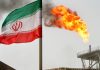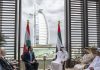


Qatar’s Prime Minister and Foreign Minister Sheikh Mohammed bin Abdulrahman Al Thani has warned Iran on Tuesday against weaponising the Strait of Hormuz in order to intimidate its neighbours.


ADVERTISEMENT
ADVERTISEMENT
Speaking alongside Turkish Foreign Minister Hakan Fidan in Doha, Al Thani told the gathered press that “Iran should not use this strait as a weapon to pressure or to blackmail the Gulf countries.”
“It’s an international water corridor that should be always protected and should be always safeguarded,” he said. “This current state of the strait and what’s happening over there should never be repeated.”
Fidan further emphasised Al Thani’s message regarding the crucial strait, through which a significant share of the world’s oil and gas supplies passes.
“Preventing the Strait of Hormuz from being used as a weapon is extremely important not only for regional security and stability but also for the global economy,” he said.
Doha and Ankara further backed the diplomatic efforts to broker a ceasefire between Washington and Tehran, amid mounting concerns that the war could escalate after the talks stalled in recent days.
“Qatar and Turkey jointly support … the efforts undertaken by our brotherly nation of Pakistan to find a solution to this war, reach a ceasefire agreement, end the war as soon as possible, reopen the Strait of Hormuz and allow freedom of navigation to return to normal once again,” Al Thani said.
Qatar and Turkey also warned against “any unilateral measures” that could threaten maritime security in the Gulf and condemned attacks on commercial vessels as violations of international law, endangering global trade and vital supply chains.
“Continuation of diplomacy is the only way forward,” Al Thani said.
‘Both parties want the war to stop’
Al Thani said he had travelled to Washington two days earlier to press for support for the peace initiative and warn US officials about the consequences of prolonging the war.
“My visit to the United States focused mainly on supporting the Pakistani efforts and ensuring there is positive engagement with these diplomatic efforts to reach a solution as quickly as possible,” he said.
Al Thani said he had explained to US officials “the impact this war has unfortunately had on the region and that prolonging it will not be in the interest of anyone in the region or the world”.
Fidan said both Washington and Tehran appeared willing to end the war, but remained divided over how a potential agreement should be framed.
“Both parties want the war to stop. They want the Strait of Hormuz to be opened, and they want the nuclear files to be resolved in some way,” the Turkish foreign minister said.
“Now the problem is how can we find a solution with the right prioritisation and wording so that both sides can accept it.”
The diplomatic push comes as the fragile ceasefire between Washington and Tehran has come into question after US President Donald Trump rejected Iran’s latest response to Washington’s ceasefire proposal as “totally unacceptable”.
Iranian state-run media said Tehran had demanded full sovereignty over Hormuz, an end to sanctions and compensation for war damages, while warning it would respond militarily to any renewed US strikes.
The latest tensions have fuelled fears of further disruption in the Gulf after attacks on commercial shipping and threats to maritime security sent oil prices sharply higher earlier in the war.
The ceasefire took effect on 8 April through Islamabad’s mediation after 39 days of US and Israeli strikes on Iran that began on 28 February and Tehran’s daily missile and drone bombardment of neighbouring countries.
The talks have so far failed to produce a lasting agreement, and Trump extended the truce without setting a deadline.