
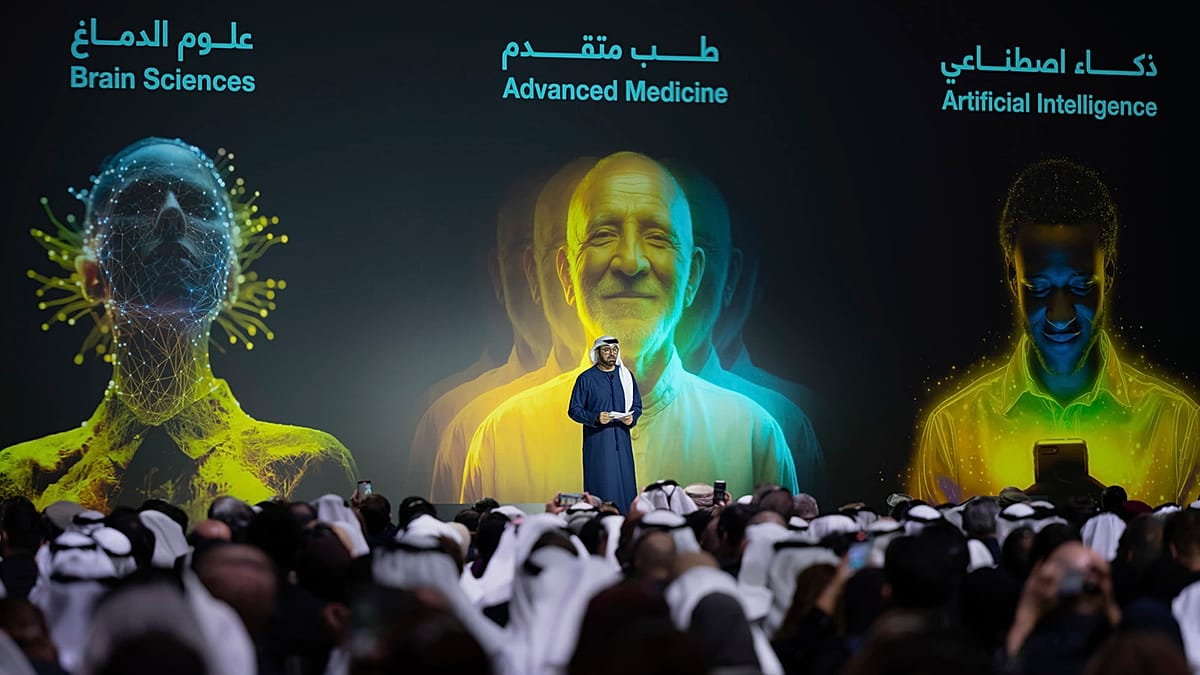
The World Governments Summit opened in Dubai on Tuesday, bringing together delegations from more than 150 governments for three days of discussions on governance, economic resilience and global stability amid mounting geopolitical tensions and rapid technological change.
This year, the summit boasts one of the biggest senior political gatherings in the event’s history, with heads of state, ministers and policymakers gathering as pressure mounts on governments to adapt faster and deliver more effectively.
Opening sessions: Reform over rhetoric
From the outset, speakers stressed that existing governance models are under strain, with a clear message that incremental change is no longer sufficient as governments face rising public expectations alongside increasingly complex global risks.
In his opening keynote, Mohammad Al Gergawi, UAE Minister of Cabinet Affairs and Chairman of the World Governments Summit, framed the current moment as a turning point.
“After every revolution, there was a redefinition of government,” Al Gergawi said, challenging institutions to reassess their design.
“The question today is – are governments designed for the man of tomorrow or the man of yesterday?”
He described the current era as “a historical opportunity for governments to redefine themselves,” arguing that “humanity never regressed because of fear. It evolved when it gained audacity.”
AI governance takes centre stage
Artificial intelligence featured prominently across early sessions, with emphasis on governance, oversight and public trust rather than rapid deployment.
Omar Sultan Al Olama, Minister of State for Artificial Intelligence, Digital Economy and Remote Work Applications, told Euronews the focus must be on ensuring AI adoption is matched by institutional readiness, skills development and regulatory clarity.
Khalfan Belhoul, Chief Executive Officer of the Dubai Future Foundation, stressed the importance of building governance systems that evolve continuously rather than react to crises after the fact.
Midday sessions focused on economic pressures facing governments, including debt, uneven growth and constrained fiscal space. Several speakers warned that economic policy mistakes now carry faster and more severe consequences.
Mthuli Ncube, Zimbabwe’s Minister of Finance, Economic Development and Investment Promotion, discussed balancing growth ambitions with stability and investor confidence, particularly in emerging economies.
Mohamed Bin Taliah, Chief of Government Services for the UAE, said government operations must be redesigned to be faster, more responsive and outcomes-driven.
Geopolitical tensions surface
Regional stability and geopolitical risk featured prominently, with speakers warning against escalation and stressing the importance of long-term political solutions.
Anwar Gargash, diplomatic adviser to the UAE president, underlined the need for sustained dialogue to reduce regional tensions.
“I think that the region has gone through various calamitous confrontations. I don’t think we need another one, but I would like to see direct Iranian-American negotiations leading to understandings so that we don’t have these issues every other day,” Gargash said.
He linked diplomacy directly to economic recovery, saying Iran needs to rebuild its relationship with the United States through “a political deal, a wider geostrategic deal that will actually be beneficial to the area.”
Former US Secretary of State Mike Pompeo addressed what he described as an ongoing threat from Iran.
“When I talk about Iran, I always like to do full disclosure; they’re still trying to kill me,” Pompeo said, adding “for sure, a million-dollar bounty on my head, which my wife thinks is a little low.”
He questioned prospects for long-term stability in the region. “To think that there’s a long-term solution that actually provides stability and peace to this region while the Ayatollah is still in power is something I pray for, but find unimaginable,” he said.
Fred Kempe, President and CEO of the Atlantic Council, weighed in on the direction of US engagement with Tehran.
“I don’t think he’s going to leave Iran before he has a way to do that, whether it’s through talks, or at least, he’s going to do it through talks or through other means,” Kempe said.
Sessions examined how governments work with business while retaining regulatory authority, with speakers stressing the importance of clear frameworks to avoid blurring the lines between public and private responsibilities.
George Salama, Group Executive President of the Salama Group, discussed how AI intersects with government resilience and economic stability.
As the first day drew to a close, the mood across sessions was pragmatic, with broad acknowledgement of the scale and complexity of challenges facing governments alongside limited appetite for quick fixes.