

Published on
•Updated
Iran restricted its airspace to commercial planes for hours early Thursday, providing no explanations as tensions with the United States over Tehran’s brutal suppression of countrywide demonstrations remained high, and as Donald Trump on Wednesday said he has not ruled out US military action against the country.
According to pilot guidance issued by Iran, which lies on a key East-West flight route, the closure ran for over four hours and saw international carriers diverted north and south around Iran.
“Several airlines have already reduced or suspended services, and most carriers are avoiding Iranian airspace,” said the website SafeAirspace, which provides information on conflict areas and air travel.
“The situation may signal further security or military activity, including the risk of missile launches or heightened air defence, increasing the risk of misidentification of civil traffic.”
Media reports suggest that after one extension, the closure, which immediately rippled through global aviation because Iran is located on a key East-West route for airlines, appeared to have expired, and several domestic flights were in the air just after 7 am local time.
The airspace closure came as some personnel at a key US military base in Qatar were advised to evacuate, including the embassy in Kuwait, which also ordered its personnel to “temporarily halt” going to the multiple military bases in the Gulf nation.
Iran previously shut its airspace during the 12-day war against Israel in June, when it exchanged fire with Israel during the Israel-Hamas war.
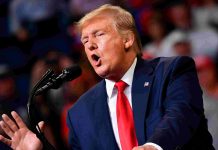
On Wednesday, US President Donald Trump continued with his series of vague statements that left unclear what American action, if any, would take place against Iran.
In comments to reporters, Trump said he had been told that plans for executions in Iran have stopped, without providing many details. The shift comes a day after Trump told protesters in Iran that “help is on the way” and that his administration would “act accordingly” to respond to the Islamic Republic’s deadly crackdown.
Iranian Foreign Minister Abbas Araghchi also sought to tone down the rhetoric, urging the US to find a solution through negotiation.
Asked by Fox News what he would say to Trump, Araghchi said: “My message is: Between war and diplomacy, diplomacy is a better way, although we don’t have any positive experience from the United States. But still diplomacy is much better than war.”
Trump claims killing of Iran protesters ‘has stopped’
The change in tone between Washington and Tehran came hours after the chief of the Iranian judiciary said the government must act quickly to punish the thousands who have been detained.
And as activists warned that hangings of detainees could come soon, Trump made a vague statement Wednesday that he’s been told “on good authority” that plans for executions stopped, even as Tehran has indicated fast trials and executions ahead in its crackdown on protesters.
“We’ve been told that the killing in Iran is stopping — it’s stopped — it’s stopping,” Trump said at the White House while signing executive orders and legislation. “And there’s no plan for executions, or an execution, or executions — so I’ve been told that on good authority.”
Nearly 3500 people have been killed in Iran’s security forces’ crackdown on the demonstrations, according to the U.S.-based Human Rights Activists News Agency.
The death toll exceeds that of any other round of protest or unrest in Iran in decades and recalls the chaos surrounding the country’s 1979 Islamic Revolution.
Trump, who has vowed to act militarily on the issue, on Monday imposed 25 per cent tariffs on countries doing business with Tehran and urged Iranians to keep protesting, saying that “help is on the way” and that his administration would “act accordingly” to respond to the Iranian government.
But the US president has not offered any details about how the US might respond, and it remains unclear whether he would follow through on his threats of military action and what that might entail.