
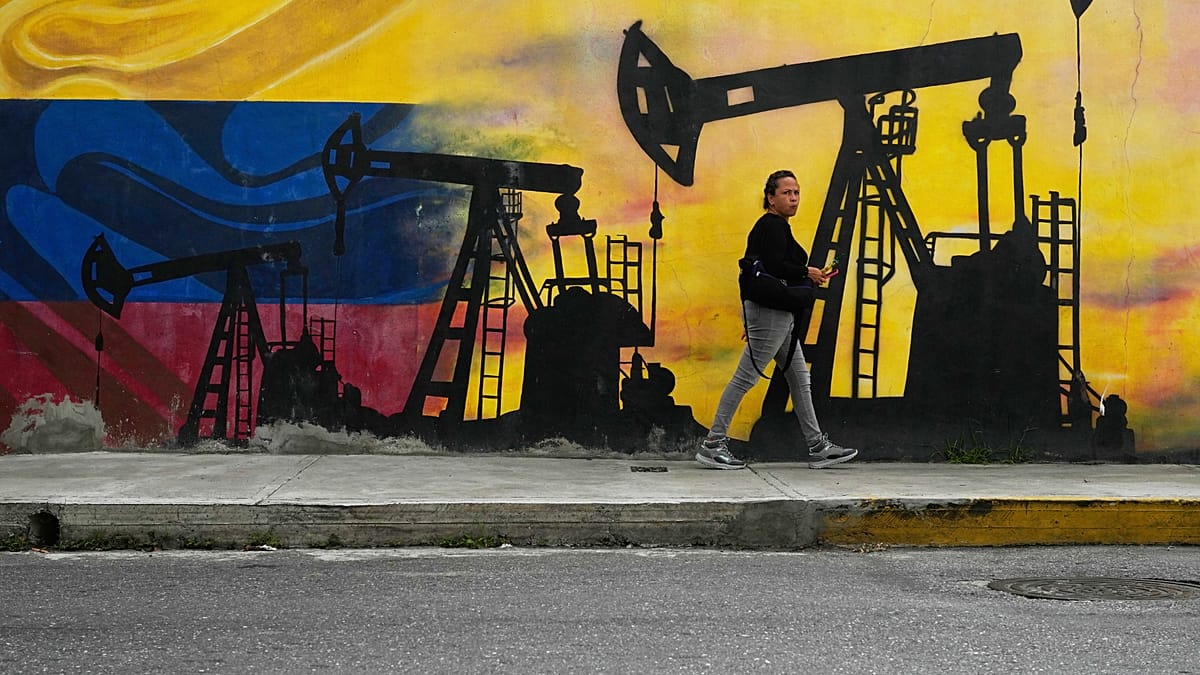
For more than two decades, Venezuelan oil functioned less as a commodity and more as a diplomatic instrument, circulating through bilateral agreements, guaranteed loans and barter deals that bypassed traditional market mechanisms.
From 1999 onwards, successive governments promoted a strategy linking foreign policy, state financing and management of the country’s main industry. The result was a network of bilateral alliances that channelled much of Venezuela’s crude outside conventional buying and selling circuits.
The model consolidated amid high oil prices and mounting financial constraints. Cuba, China, Russia, and Iran became central partners in an architecture that combines energy supply, credits, technical cooperation and diplomatic support.
Under President Hugo Chávez, oil became central to the redefinition of Venezuelan foreign policy. Energy diplomacy was presented as an instrument of regional integration and South-South cooperation.
Caracas began offering oil on preferential terms through bilateral and multilateral agreements, with long-term financing schemes and non-monetary compensation mechanisms.
These agreements relied on PDVSA’s strength during early chavismo, when production remained high, and revenues sustained large external commitments. Crude served as a tool to establish stable political alliances and to strengthen Venezuela’s presence in Latin America and the Caribbean.
US political scientist Javier Corrales describes Venezuelan oil policies under Chávez as an example of ‘Dutch disease’, a term used in economics to describe a situation in a nation’s economy in which the development of one sector that is particularly prosperous leads to the underdevelopment of other important sectors.
As Corrales notes in his book A Dragon in the Tropics, Chávez was not the first president in Venezuelan history to be fascinated by the promise of oil, but he was the one who allowed the sector to decline the most, and most statistics show a deterioration of the industry since the beginning of his presidency.
Following Chávez’s death, the government of Nicolás Maduro maintained the basic structure of these alliances.
The decline in oil production and the deterioration of infrastructure shaped the number of agreements, but did not alter their fundamental logic. Oil remained a key factor in sustaining political and financial relations with strategic partners.
During this period, crude oil shipments were largely used to fulfil prior commitments, pay debts or secure essential supplies. The network of alliances evolved in line with the new constraints, but continued to articulate much of the country’s foreign and economic policy.
A system of exchanges outside the conventional market
For more than two decades, Venezuelan oil circulated mostly through bilateral agreements, guaranteed loans, barters and cooperation agreements. This system reduced direct exposure to the market and traditional pricing mechanisms.
The result was an international insertion based on stable relations with a limited number of partners, in which oil acted as a financial guarantee, a diplomatic instrument and a basis for cooperation.
This network has evolved over time and remains a central element in understanding Venezuela’s economy and foreign policy today.
Cuba: Energy for services
Beginning in the early 2000s, Venezuela guaranteed regular oil shipments to Cuba in exchange for professional services and cooperation.
The scheme expanded through PetroCaribe, incorporating numerous Caribbean countries with deferred payment and preferential rates.
Rogelio Núñez, senior researcher at the Elcano Institute, said Cuba’s dependence on Venezuelan oil is greater today than in previous years, although received volumes are lower.
This oil was not only used domestically, but for years a significant portion was resold on international markets, allowing Havana’s financial income that disappeared when the United States intensified interceptions and sanctions.
Manuel Hidalgo, economist at Pablo de Olavide University, said Cuba imported approximately 30% of its energy needs. The interruption of Venezuelan supplies aggravates an already critical situation.
The rupture of this energy relationship “cuts to the quick” and fully affects the Cuban economy, Hidalgo said. This external pressure could force some regime adjustment, though not necessarily immediate.
Hidalgo pointed out unusual statements in official Cuban media with self-criticism, something “not seen for years.”
Regarding Cuba’s quid pro quo, Hidalgo recalled an exchange of commodities, including sugar and traditional exports, as well as the provision of services.
China: Financing through oil-backed loans
Since the late 2000s, Chinese state-owned banks provided oil-backed loans, becoming one of Venezuela’s main external financing sources. Payments were structured in crude shipments, implying sustained supply commitments.
This allowed the Venezuelan state access to resources when international financial markets were restricted. Chinese companies participated in exploration and production projects, particularly in the Orinoco Oil Belt.
Hidalgo said Beijing exploited Venezuela’s precarious situation to strengthen its presence. However, Venezuelan oil was probably not China’s main objective, as it is heavy crude, difficult to process, with high costs and limited export capacity due to a lack of investment.
Venezuela was producing below its potential, reducing crude’s economic attractiveness. Chinese interest focused more on other raw materials and strategic positioning, though the agreements are “rather opaque,” Hidalgo said.
Hidalgo described the US reaction as part of a strategy to limit China’s access to resources and strategic positions in South America, with Washington considering the region part of its sphere of influence.
Since 2000, Beijing became the first or second largest trading partner of most Latin American countries, ahead of Washington. Uncertainty generated by increased US tariffs during Donald Trump’s presidency accelerated this process.
In Venezuela’s case, China has become the primary destination for oil exports, accounting for nearly 95% of the country’s external revenues.
After Maduro’s fall, US Secretary of State Marco Rubio stated Washington would not allow “the Western Hemisphere to become a base of operations for adversaries, competitors, and rivals of the United States.”
Chinese firms are among the few foreign companies continuing to operate in Venezuela. State-owned China National Petroleum Corporation manages several joint ventures.
According to US think tank American Enterprise Institute, between 2016 and 2023 Chinese investment in the Venezuelan oil sector reached about $2.1 billion.
Maduro’s arrest and increased political instability have increased China’s exposure. Venezuela’s outstanding debt to Beijing exceeds $10 billion, and repayment remains uncertain.
Venezuelan oil accounted for around 4% of total Chinese imports last year. Despite Maduro’s departure, much of the country’s administrative structure remains intact.
Russia: Geopolitical partnership
Russia strengthened its relationship with Venezuela through energy sector partnerships. Russian companies became involved in joint oil projects, contributing capital, technology and operational capacity in both crude and gas production.
Energy cooperation was part of a broader bilateral relationship, which also encompassed diplomatic support and political coordination in international fora.
Hidalgo said that oil is not Moscow’s primary incentive in its relationship with Venezuela. Russia is a major energy producer and currently has difficulties selling its own crude, so seeking Venezuelan oil makes no sense.
The link to Venezuela reflects geopolitical motivations. Russia’s presence in South America allows Moscow to exert pressure on the United States in the region, with Cuba as a key player, and to have a political and military partner on the continent.
This relationship can also facilitate access to certain products or materials that Russia does not easily obtain in other markets. However, the strategic and political component outweighs any direct economic benefits, Hidalgo said.
When more details emerge about certain recent episodes, such as shipment contents tapped by US authorities, it will be possible to better understand the depth of Venezuela-Russia relations, which could be practically cut off, he said.
Iran: Energy exchange under sanctions
Relations with Iran intensified in the second half of the 2010s, when both countries faced severe constraints in global financial and energy markets.
Direct exchange mechanisms were developed, allowing fuel supply, components and technical assistance.
These agreements included petrol and condensate shipments to Venezuela, as well as Venezuelan crude receipt by Iran.
Oil played a central role as an exchange asset in schemes designed to operate outside traditional trading channels.
Hidalgo provided no concrete information on specific Iran-Venezuela agreements, stressing these relations are marked by an enormous lack of transparency. Many agreements are negotiated and managed outside public scrutiny.