
By Euronews
Published on
•Updated
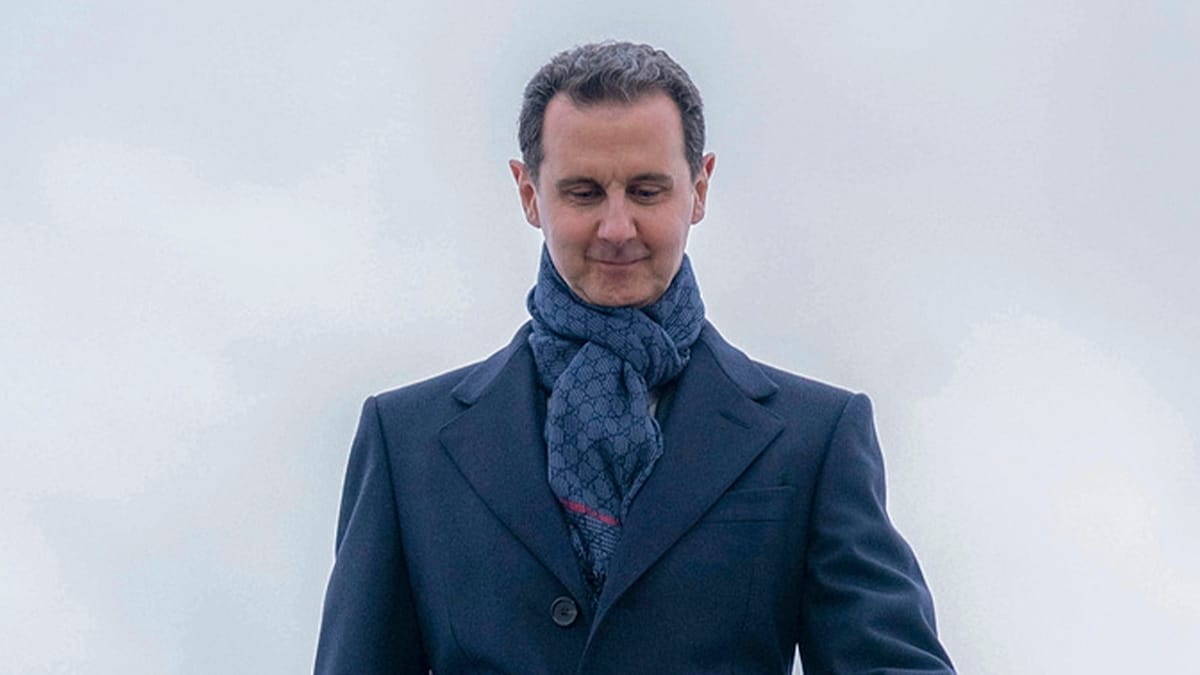
Bashar al-Assad is living in Moscow under tight restrictions imposed by Russia nearly a year after fleeing Syria, with his movements limited and public appearances banned, according to multiple reports.
The former Syrian president, who fled Damascus on 8 December 2024 when forces led by now-interim President Ahmed al-Sharaa captured the capital, issued only one public statement eight days after his departure.
In that 16 December statement, al-Assad claimed his exit “was not pre-planned” and he intended to continue fighting, but Moscow insisted on his “immediate withdrawal”.
Since then, al-Assad has maintained near-total silence. His eldest son Hafez — named after Bashar’s father, whose rule he inherited — released a video in mid-February showing him walking near the Kremlin, recounting the family’s hasty departure from Syria, but al-Assad himself has made no further public remarks.
Russian Foreign Minister Sergey Lavrov confirmed in October that al-Assad and his family live in Moscow, stating Russia granted them asylum for humanitarian reasons.
Russia imposed strict conditions on al-Assad’s stay when granting asylum in April 2025, according to Russian Ambassador to Iraq Elbrus Kutrashev. Al-Assad must refrain from all media appearances and political activities, Kutrashev told the Islamic Republic News Agency.
From poisoning to video games
The Syrian Observatory for Human Rights claimed in September that al-Assad was hospitalised in critical condition after suspected poisoning. The monitoring group said he spent nine days in a hospital on Moscow’s outskirts before being discharged on 29 September.
Lavrov denied the poisoning reports in October, saying al-Assad “has no issues living in our capital”.
Russian secret services keep al-Assad under exceptionally strict protection, the UK-based Syrian Observatory for Human Rights said. His movements are highly limited, and he has stopped public speaking.
Al-Assad’s wife Asma was diagnosed with acute myeloid leukaemia in May 2024, Syria’s presidency announced. She had previously battled breast cancer and was declared cancer-free in 2019.
British newspaper The Telegraph reported in late December 2024 that doctors gave her a 50/50 chance of survival, with sources saying she was in isolation in a Moscow hospital to avoid infection.
The German weekly Die Zeit reported in October that al-Assad resides in Moscow’s modern financial district, though the exact location remains unconfirmed.
The apartments are described as luxury units with high ceilings, floor-to-ceiling windows and access to shopping centres and restaurants.
A source close to the al-Assad family told Die Zeit that the family owns multiple apartment units and sometimes stays in a villa outside Moscow.
The source claimed al-Assad “spends much of his time playing online video games” and deals with bodyguards from a private security company paid for by the Russian government.
Between 2018 and 2019, the al-Assad regime transferred some $250 million (€237 million) in cash to Moscow, with at least 18 luxury apartments bought by clan members in the city, according to media reports.
The US State Department estimated al-Assad’s family wealth at between $1 billion (€950 million) and $2 billion (€1.9 billion) in 2022, funded from “arms and drug trafficking and the rental economy” through shell companies.
Syria’s transitional government under al-Sharaa has requested al-Assad’s extradition for trial. Russia has refused to hand him over, with the Kremlin maintaining that President Vladimir Putin personally granted him asylum and that it would remain unchanged.